" /> Daily Blague: April 2006 Archives

« March 2006 | Main | May 2006 »

April 30, 2006

Book Review

In which we have a look at this week's New York Times Book Review.

Fiction & Poetry

The poetry reviewed in this week's review is by writers established for their work in other genres, but reviewer David Kirby notes that both Mary Karr and Jim Harrison have published several books of poetry before - in Harrison's case, nine of them. Curiously, both of these tough-guy writers have imbued their new collections with an aura of the sacred. The very title of Ms Karr's Sinners Welcome: Poems underscores her discovery of the power of prayer; Mr Kirby claims Hopkins as "her unacknowledged master ... who also used prayer as a booster rocket for poetry rather than a replacement for it." Mr Harrison is a poet of the majestically open American West, and something of a pantheist. The extract from Saving Daylight quoted suggests that he is also attentive to the little failings of his aging body. Mr Kirby leads me to expect that both books will make a hit with readers in search of unsentimental inspiration.

This week's cover story goes to Gary Shteyngart's Absurdistan, very enthusiastically reviewed by Walter Kirn. Very:

Just unbutton its shirt and let it bare its chest. Like a victorious wrestler, this novel is so immodestly vigorous, so burstingly sure of its barbaric excellence, that simply by breathing, sweating and standing upright it exalts itself.

Having read a portion of the novel that appeared in The New Yorker recently, I must say that Mr Kirn has got it right - although I myself do not find anything exalting in the posture of perspiring victors. Mr Kirn is also right to place Absurdistan in the tradition of big Russian novels. One line of the review deserves to be highlighted simply for its perspicacity about the United States:

During his collegiate heyday [in the US], he gorged at the American buffet, slurping up rap music, psychotherapy and the sky's-the-limit complacent optimism that we take for granted as a birthright but that Misha sees for what it is: a glorious geo-historical accident.

The Review is graced by no fewer than three photographs of the very unkempt Mr Shteyngart.

Benjamin Markovits gives Canadian Michael Winter a near-miss, almost-favorable review for The Big Why, a novel about Rockwell Kent. Kent has become the poster boy for idealistic artists who aren't as good as they think they are or need to be. His work tips uneasily on the line between art and illustration, and its longing for cold purity is both endearing and exasperating. Mr Markovits believes that "the sum of the book falls just short of the virtue of its parts," and that perhaps Mr Winter's most serious miscalculation was to tell his story in Rockwell's first-person voice. This is the sort of review that would make me go back and rework my novel. But nobody goes back and reworks anything nowadays.

David Handler, the writer behind Lemony Snicket, has published Adverbs, something for the grownups, and James Poniewozik calls it "neither a novel nor, really a story collection: it is a concept album."

What saves Adverbs from Handler's unconvincing dystopian themes is his exuberantly funny voice and his ability to lard his stories with details that return, pages later, with multiplied resonance.

Not for me they wouldn't. I'd like to linger for a moment on an image that Mr Poniewozik quotes:

A Manhattan traffic artery [?] is "cabs and cabs and cabs and the occasional car that wasn't a cab so the whole thing looked like a scarcely-been-touched ear of corn."

I hate such strained and gratuitous metaphors, and I refuse to applaud them as "good writing."

Gregory Cowles reviews new fiction by five women in his Fiction Chronicle. Or at least that's what I thought until I googled Starling Lawrence, senior editor at WW Norton and not the recipient of a favorable review. In thumbnails:

Family and Other Accidents, by Shari Goldhagen. "[H]er book reminds you that simply paying attention is one of the things literature can do best.

The Lightning Keeper, by Starling Lawrence. "There are loving descriptions of machinery ... But novels aren't turbines, and spinning your wheels isn't always the best way to generate energy. For a novel about electricity, The Lightning Keeper is disappointingly static."

The Madonnas of Leningrad, by Debra Denn. "The story is a little too schematic, and Dean's writing a little uneven, but The Madonnas of Leningrad is admirably humane in its determination to restore the dignity Alzheimer's strips away."

We Are All Welcome Here, by Elizabeth Berg. After implicitly chastising Ms Berg for being an Oprah-winner, Mr Cowles writes, "Berg writes too superficially to escape the familiar confines of the coming-of-age novel, yet her strong descriptive skills add a veneer of authenticity to this slight, charming tale..."

Once Upon A Day, by Lisa Tucker. Even worse: "This is fiction as self-help manual, its life-affirming message about as subtle as a kiss from a sledgehammer."

On the whole, Mr Cowles appears to be an unsympathetic critic - unsympathetic, that is, to all but one of these writers' aims. I do wish that the editors of the Book Review would take more care to avoid such assignments. I, for example, would be the wrong person to ask for a review of Joyce Carol Oates's fiction, which I simply can't read. Cathleen Schine's initially favorable review of High Lonesome: New & Selected Stories 1966-2006 enumerates the reasons why I can't stand this writer's work. "[T]here is, first of all, no room for humor in Oates's intense, fevered world."

One of the most extraordinary aspects of Oates's intense and violent world of struggle is the absence of suspense. Her language lunges forward at a tense, breathless pace, as if she were writing a thriller, but Oates is actually kind of a fatalist. Characters often question whether they have free will, and with good reason: they don't.

What I don't understand is how, having said that, Ms Schine can proceed to laud High Lonesome. But she doesn't, so I don't have to.

Nonfiction

This week's woo-hoo must-read review is by Kurt Andersen. Mr Andersen tosses Gay Talese's second volume of memoirs, A Writer's Life, into the food processor and pulses it to shreds. Here is the merest nugget.

Even more surprising, given that Talese was the New Journalist celebrated for deep reporting rather than virtuosic writing, is the paucity of well-observed moments. At the Upper East side restaurant Elio's, for instance, he sees fit to note that one night he sat "near a large table where the talk is all about book publishing and real estate prices in the Hamptons." Really? In Beijing, he decides his interpreter is lousy, but keeps the examples of poor translations to himself. Talese spent five months in China, but there's scant evidence here of what he saw or heard or smelled or felt.

In short, an epic of nombrilismeRead the review.

Jennifer Senior is far kinder to Joe Klein's Politics Lost: How American Democracy Was Trivialized by People Who Think You're Stupid. But she remarks that the earlier portions of the book are freighted with insider arcana that Mr Klein fails to make interesting in a larger context. Altogether, she conveys the impression that, simply by taking such good snapshots of the political process today - how consultants shape campaigns - Politics Lost may be indispensable reading.

Jacob Heilbrunn gives Cobra II: The Inside Story of the Invasion and Occupation of Iraq, by Michael R Gordon and Bernard E Trainor, a very favorable review, but at the last minute makes a comment that insures that I won't read the book.

Indeed, Gordon and Trainor's book suggests a conclusion they don't draw: the initial impulse for war may have had little to do with Iraq itself. Like the Western votaries of Communism in the 30's, who projected their various fantasies about utopia onto Spain or the Soviet Union, Administration officials seem to have viewed Iraq as a kind of abstract proving ground for their pet theories about warfare, terrorist or democratization. They saw the Iraq they wanted to see. Their delusions bring to mind the British historian AJP Tay'or's observation that the dangerous thing isn't when statesmen cannot live up to their principles. It's when they can.

It would be to explore that conclusion that I would read Cobra II, which otherwise, and aside from a few damning personal details (At one meeting, General Tommy Franks yawned in contempt of the prospect of casualties), seems to make a case with which I'm already familiar, thanks to the work of Seymour Hersh.

Oracle Bones: A Journey Between China's Past and Present, by Peter Hessler, gets a glowing review from China-specialist Jonathan Spence, who suggests that you need only glance at two particular chapters to be "hooked."

Serenely confident, he has a marvelous sense of the intonations and gestures that give life to the moment; he knows when to join in the action and when simply to wait for things to happen.

Mr Spence helpfully notes the two-dimensional structure of Oracle Bones, with sequential chapters about current affairs interrupted from time to time by reflections on aspects of China's long history. I can't think why I missed Mr Hessler's work in The New Yorker.

There are two musical biographies this week. Fever: The Life and Music of Miss Peggy Lee, by Peter Richmond, gets a largely favorable review from Times film and "cabaret" critic Stephen Holden.

Despite the hyperbole and the numerous writer's tics ... a real person still emerges in this book. That woman (the forerunner of contemporary singers as different as Diana Krall, KD Lang and Sade) is a wounded, maddening, magnetic artistic force who, four years after her death, still remains undervalued.

Greg Sandow is more ambivalent about Stephen Walsh's Stravinsky: The Second Exile: France and America, 1934-1971. He calls it a "superb" account of the vital relationship between Stravinsky and Robert Craft that began in 1948 and infused Stravinsky's output ever thereafter, but he remarks that "Walsh could have done more with the music," and he proposes an "alternate biography" that would explain Mr Walsh's conclusion, unsupported in his view, that Stravinsky's music was "the most exact echo and the best response of those terrifying years that brought it into being" even while sounding "studiously, impenetrably deaf to the world around it."

Speaking of ambivalence, that would be the word to characterize John Wilson's review of Karen Armstrong's The Great Transformation: The Beginning of Our Religious Tradition. Ostensibly a work in comparative religion studies, The Great Transformation traces the development, during what Karl Jaspers called "The Axial Age" (900-200 BCE) of all the world's principal religions (save, of course, Islam).

What exactly Armstrong sees as unfolding is never stated very clearly, but The Great Transformation can be read as a story of collective human enlightenment much like the familiar idealized accounts of the Renaissance or the Enlightenment proper, though on a much grander scale.

Mr Wilson charges Ms Armstrong with oversimplification and with projecting "her own modern sensibility" onto ancient texts. One concludes that Ms Armstrong, though she deserves praise for starting a discussion, is in a little over her head here.

I've seen Stuart Kelly's The Book of Lost Books: An Incomplete History of All the Great Books You'll Never Read in a bookshop, and decided against it, largely because, as the title suggests, I don't need a list of nonexistent books that I'll never have to feel guilty about passing on. The lost books range from the incinerated (think Library of Alexandria) to the abandoned (Gibbon's history of the Swiss). Joe Queenan, however, is the right guy to give The Book of Lost Books a favorable review. He cherrypicks a few juicy tantalizing anecdotes (Jane Austen's projected Magnificent Adventures and Intriguing Romances of the House of Saxe Coburg), but he shares Mr Kelly's regrets about the ability of fantastics to blot our past by erasing some of the records.

The sometime biographer of Lord Curzon, David Gilmour, has moved on to examine the apparatus that Curzon and other viceroys oversaw in India, and A J Sherman gives his The Ruling Caste: Imperial Lives in the Victorian Raj a quite favorable review, noting that it is a useful corrective to the somewhat self-loathing views of EM Forster and other critics of the Raj. Of those who survived their terms in India, many Englishmen returned to find themselves at least as out of place at "home" when they retired.

I don't know what to make of George De Stefano's An Offer We Can't Refuse: The Mafia in the Mind of America, because I've only watched "The Sopranos" once or twice, and never felt the slightest tug of affection for the way of life portrayed therein. "The Sopranos" is well-executed entertainment, but its attempt to humanize organized crime is insidious pop culture. Crime reviewer Marilyn Stasio thinks that Mr De Stefano gets a bit carried away, confusing living mob figures with their fictional counterparts. If "The Sopranos" signifies anything, it's our wish to take one last look at expiring patriarchy before sealing the casket shut. We might shudder with a half-pleasant frisson, but we ought not to wish to join the doomed.

In case you haven't had enough of Sir Ernest Shackleton, Sara Wheeler writes about the subject of Kelly Tyler-Lewis's The Lost Men: The Harrowing Saga of Shackleton's Ross Sea Party. Ms Wheeler says that Ms Tyler-Lewis tells the story "well," but the vast bulk of her "review" consists simply of her poaching it.

Reza Aslan's Essay, "The Epic of Iran," touches on something that I didn't know: the Iranian national epic, Shahnameh, is shot through with royalist resentment of the Arab imposition of Islam.

Today, as a new generation of Iranians struggles to define itself in opposition to a widely reviled religious regime, the Shahnameh is re-emerging as the supreme expression of a cultural identity transcending all notions of politics or piety.

Jolly good news. I presume that Mr Aslan does not want to help the "opposition" along with nuclear devices.

April 29, 2006

Friends With Money

This space is usually occupied by my feelings about the movie that I saw yesterday. Unhappily, my mind is so limited that I can no longer recall the important matter that I was going to raise, forgotten while I talked about (or so I thought) the movies.

I go to the first showing of something every Friday, and then I come home to clean the apartment. Why these occupations should fit so well together is beyond me. Seeing a movie a week is such a break with my past that my past no longer recognizes me. It's as though I were the son of a Lubavitcher rabbi who has taken up charcuterie.

I went to see Friends With Money, an existential film about four women in Los Angeles. The lack of plot is not annoying, and the thwarting of expectations is almost amusing. One example will suffice: Aaron (Simon McBurney) is thought to be gay by his wife's friend Christine, and indeed he has a lovely lunch with another man, also named Aaron, whose name I can't seem to drag out of IMDb. Aaron's wife, Jane (Frances McDormand) stomps through the movie in a more or less unbroken hissy fit - could she be "upset" that her husband is gay? (And why would that make her refuse to wash her hair?) The question is never answered. At least Aaron and Jane are still married at the end of the movie. Oops, sorry. 

To the best of my knowledge, I was the only man who showed up to see Friends With Money. Ladies, save the husband, at least until video. Unless he's a cosmopolitan like me who finds deft social comment truly piquant.

It's ungallant of me not to say that Jennifer Aniston is a great comédienne. Really not, when you look closely, another pretty face. Another intelligent face.

April 28, 2006

He's a fairy

Paul Krugman's column in today's Times calls George W Bush "The Crony Fairy." The Crony Fairy does strips federal agencies of qualified personnel and replace them with idiots who belong in country clubs. It's a good piece,  and Times Select readers will find it without help from me.

I continued reading the newspaper, but, for some reason, the moniker lingered and intensified. "The Crony Fairy" - hmm. How about, just, "The Fairy"? You don't hear that much anymore, at least, not here in New York. "Fairy" used to be a standard insult meaning "homosexual." What it brought to the table was the idea that a man who was a fairy wasn't really a man but an incorporeal being lacking you-know-what. The accent wasn't on sexual preferences, but rather on the lack of sexuality. Perhaps what "fairy" really expressed was wishful thinking on the part of straight men.

Transpose all this to "leadership." Replace testicles with integrity. It becomes obvious in an instant: George W Bush is a fairy. The beauty part is that for once we have a nickname that would really piss him off!

What We Really Need Is A Gas Bag Holiday

As Ridley asks in Aliens, "Did IQs suddenly drop while I was lost in space?" A propos of a "gas tax holiday" proposed in the Senate yesterday, David Stout reports,

The $100 rebate seemed to be the centerpiece of the plan laid out today. "It will show people that Washington gets it," said Senator Jim Talent of Missouri, "and that it's time to provide some relief to Americans, to Missourians who are trying to support their families and are paying these very high gasoline prices."

Wow, a hundred dollars. I'm impressed. I'm sure that low-income drivers will be thrilled. That's - what? - two tanksfull at best for the average small car. What a real fix!

The current regime (all three branches) is so utterly incapable of thinking about our fuel problem that I can only count on their making it so much worse that Americans begin thinking about it for themselves. Personally, I vote for a windfall profits tax.

April 27, 2006

I'm not complaining

Ich grolle nicht that I haven't known Robert Schumann's famous song of the same name until now. I'm sure I've heard it. I know that I've looked up grollen in the dictionary - having seen the title of the song dozens of times. (Our "growl" and "grumble" may be relatives.) But for one reason or another the music was never at hand. Until yesterday. Yesterday, I found myself playing it over and over again, alarmingly glued to Matthias Goerne's way with the music. (And to pianist Vladimir Ashkenazy's.) 

I am an instant convert to the church of this beautifully urgent song, "Ich grolle nicht."

Update: wondering if I just might have another recording of this song, I quickly found an EMI issue with tenor Ian Bostridge covering the same material as Mr Goerne (plus a few more songs). I admire Mr Bostridge, or I shouldn't have bought the CD. And I know that I listened to it. But the song just didn't register. This may be a song that I have to hear from a bass-baritone.

Delivery

Yesterday, I had a lovely walk, tracing a fattened square down to 67th Street, across the Park to Broadway, and home from Broadway and 86th. It was a lovely spring day, the air on the crisp side but not too chilly, the verdure in full first flush of green, and everyone more or less elated by the end of the nameless fifth season that stretches between genuine winter and now. You could call it "Lent," I suppose. In any case, it's over. Color has returned to life.

I had two errands, the first a long-standing but twice-postponed appointment at the allergist's. I don't have any allergies, it seems, but we're trying to figure out what I do have. I came away with some prescriptions, walked half a block south on Second Avenue, and turned around: the bus stop is right at the doctor's door. But I've never taken the M66 crosstown bus before. I will say that the ride through the Park is much nicer than it is on the the M86. The southern transverse road is much higher relative to the park, and there is no stoplight for the Park Precinct station house.

When we reached Columbus Avenue, I got off, as did almost everybody. I crossed over to the other side of Broadway with mounting enthusiasm. I had forgotten about Tower Records until just then. I rarely go to bookshops and record stores for a very good reason, and yesterday's haul was proof of why. I had to see what was out there. And what was out there? Two new-to-me CDs of Rossini songs (the funniest music ever written, and also some of the prettiest). Right next to the Rossini, the Rorem section. I ought to know the music of Ned Rorem better, and there was an ancient (1973-4) recording of chamber music for violin and piano. Buying a CD that I may not like was exactly the sort of thing I oughtn't to do. What I ought to have done long ago and finally did was fill the hole in my collection where Schumann lieder ought to be. Two disks of major stuff, interpreted by Anne Sofie von Otter and Matthias Goerne, went into my basket.

The second floor at Tower used to be given over to the classical section, boxed into one corner for quiet, and then, occupying the rest of the space, everything that isn't rock, from From Barbra Streisand to Broadway to Thelonious Monk. This space is now occupied by DVDs. I swear, I'd never have sought the DVDs out; they were just there, a Forest Perilous through which I had to pass in order to escape (not strictly true). Somehow Brokeback Mountain, Match Point, and Vargtimmen wound up in my sac.

I was on the West Side to drop off a CD that I'd burned for a friend. Hating the Post Office and packaging in equal measure, I found it much easier simply to slip the CD into a small Met gift bag and pay the four dollars for crosstown transport. That's the beauty of doormen! It never even occurred to me to take the subway from Lincoln Center to 86th Street, not on a day like this. I looked longingly up the graceful boulevard, which is always a little spiffier than it was the last time I walked it. From across the street, I took in the building that houses the Beacon Theatre, and realized that it wasn't just the theatre that has been spruced up. New windows, snappy blue awnings at the mezzanine, and a cleaned-up façade all made the old dump look better than new.

My friend's building is new. It's twenty years old, actually; I remember when it was put up, in the mid-Eighties. But it still looks new. (Richard Meier has yet to design anything quite so large as a full-block frontage uptown.) Unloading the small Met bag containing a sole CD did not significantly lighten my sac, but I noted that this is one of the cardinal conveniences of New York life: without getting into a car, you can drop off a bag across town at somebody's place whether he's home or not. Bus drivers and doorman are there for you.

I used to avoid the bus, but with age has come a certain patience. It is better, I find, to sit on a crosstown bus than never to cross town at all. But I'm still amazed by folks who get onto the eastbound bus at Lexington Avenue. Even more amazed by the folks who get on at Third. Seeing a clump preparing to board, I remembered another errand and jumped off a block ahead of time.

I don't know that I'd have taken pictures if I'd remembered to bring my camera. They'd have been of the people on the sidewalks and the songbirds in the trees. They'd have been unsatisfactorily still. My trip around (a small part of) town had a lilt to it that no camera could capture.

April 26, 2006

Blanquette de Veau

Blanquette de Veau is a surefire springtime hit that's good whenever the weather isn't too oppressively hot. It's an easy stew to cook, and it benefits from sitting overnight between the two phases of preparation. In the first, the meat is braised to tenderness; in the second, the braising liquid is converted into a béchamel sauce.

The classic French blanquette is a very basic dish, based on veal and onions alone. Whether Sheila Lukins thought it up herself or picked up the idea from, say, a clever German chef, she published a souped up version in the first Silver Palate collection (page 134), adding carrots and dill. I don't think that I could ever do without these enhancements. They shout "Frühling!"

Begin by reading the entirety of this recipe and transcribing the basics onto a sheet of paper that you can tack onto the kitchen wall. Measure out a half-cup...

Continue reading about Blanquette de Veau at Portico.

Jane Jacobs

Jane Jacobs died yesterday, aged eighty-nine. The first of her titles that I read was Cities and the Wealth of Nations (1984), when it came out. I've just pulled it down from the shelf for another look. Jacobs was famous, of course, for her perceptions of urban fabric; in Cities, she shows herself to be a city-stater. Were it not for problems of defense, I'd be one, too; the city-state seems to me to be the natural polity. Hinterlands exist to serve the cities they surround; it is foolish to accede to local interests that are contrary to the city's.

In The Omnivore's Dilemma, Michael Pollan's new book, it appears (from David Kamp's review) that the author stumbled upon a wonderfully autarchic alternative farmer in Virginia, Joel Salatin. Something of a crank, Mr Salatin asks Mr Pollan, "Why do we have to have a New York City? What good is it?" Well, Mr Salatin, New York City, like all the great cities, is a chaotic laboratory in which millions of experiments in humanity are conducted every day. Most of these are ephemeral, and many of them fail. But out of the dense exchange come our higher ideas about what we're up to. Without us, Mr Salatin, and without the cities that have flourished before ours, you, Mr Salatin, you would be living in a cave, living on nuts. It is in cities that human beings learn about themselves, and it is from human beings that misanthropes such as yourself flee. Godspeed, Mr Salatin. Keep up your admirable work. Happily, since you sell your produce to local customers only, we can manage without you. But give some thought to how much of the money that your customers pay you has recently been in a city. Has been generated there, just as you produce manure to put to good use.  

April 25, 2006

Valli

Valli.JPG

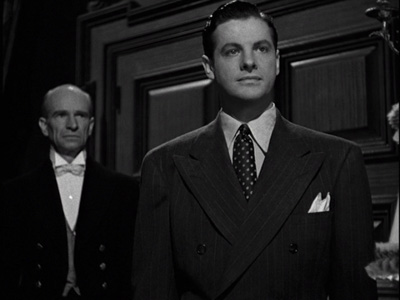
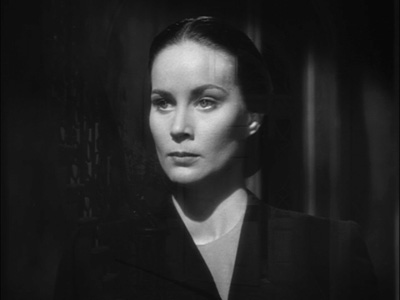
Alida Valli died the other day, in Rome, at the age of eighty-four. She was one of the most spectacularly beautiful women of the last century. She was also a gifted actress. Hitchcock fans know her as the haunting siren who almost stole Gregory Peck away from his pretty blonde wife, in The Paradine Case. The sometime baroness is probably best known for her role in The Third Man. Her greatest picture, however, may be Luchino Visconti's Senso, in which she plays a aristocratic Venetian in the 1860s who falls in love with a worthless Austrian soldier. Rarely has female desire been so painfully realised in film.

Faith Healer at the Booth Theatre

Twenty-seven springs ago, in April 1979, Brian Friel's Faith Healer was given twenty performances before closing. The formidable José Quintero directed, and James Mason starred, with Clarissa Kaye and Donal Donnelly. But the play bombed. Writing in the April 16 issue of The New Yorker, Brendan Gill praised the production but complained that it was miked. His review gives little hint, however, as to the unpopularity of the play. Perhaps it is suggested in his first sentence:

People who complain of the scarcity in contemporary theatre of plays that are well written and well made had reason to be grateful last week for the arrival, at the Longacre, of Brian Friel's Faith Healer.

We have come a long way since 1979, to a livable truce between two Broadway camps, and serious theatre is no longer the preserve of Off-Broadway. Top-billed stars can apparently revive anything. Julia Roberts is the strange cause of a revival of Richard Greenberg's Three Days of Rain, which I remember finding not particularly interesting at MTC almost ten years ago - notwithstanding the presence of Patricia Clarkson and the convincingly wet rainfall. Ralph Fiennes has done the same for Faith Healer, with Star Wars veteran Ian McDiarmid (Palpatine) to help out; for those impervious to Hollywood marquees, Cherry Jones will be an appetizing lure. It's hard to believe that, this time, Faith Healer won't be a success.

Continue reading about Faith Healer at Portico.

April 24, 2006

Turn It Off

Contrary to first impressions, this entry is not about Israel. Not really.

In The New York Times on 19 April, Tony Judt published an Op-Ed piece, "A Lobby, Not a Conspiracy," urging Americans - insiders and regular folk alike - to debate this country's policies regarding Israel, which, as a recent report in the London Review of Books by John Mearsheimer and Stephen Walt makes painfully clear, have been protected from discussion by an extremely powerful "Israel Lobby." Mr Judt writes,

But above all, self-censorship is bad for the United States itself. Americans are denying themselves participation in a fast-moving international conversation. Daniel Levy (a former Israeli peace negotiator) wrote in Ha'aretz that the Mearsheimer-Walt essay should be a wake-up call, a reminder of the damage the Israel lobby is doing to both nations. But I would go further. I think this essay, by two "realist" political scientists with no interest whatsoever in the Palestinians, is a straw in the wind.

Having fallen behind in my reading, I hadn't got to the report, and it's very likely that I wouldn't have read it without Mr Judt's prodding. It's not that I'm not interested, it's that I'm long since convinced that our Near East foreign policy has been hijacked by a group of Americans whose loyalty to the United States is clearly not undivided. Messrs Mearsheimer and Walt (at Chicago and the Kennedy School respectively) back up their argument with a lot of facts and figures, but this only makes the blatancy of the operation more depressing. They conclude with the argument that it is the Israel Lobby, and nobody much else, that's behind the push to take some sort of pre-emptive action against Iran.

Well, I'm not going to belabor this point. Whether or not there's a powerful Israel Lobby is not a matter of argument to me, and, as a New Yorker, I'm used to ritual kowtowing to Jewish sensibilities on the part of all civic leaders. What I do fear is that the excesses of Israel Lobby policies is going to breed some genuine anti-Semitism in this country. The LRB report - what a scandal that, whatever its merits, it hasn't been published here! - brings one to the point of wondering if certain Jews and their evangelical sympathizers aren't out to fulfill the libels of the Protocols of the Elders of Zion.

This isn't what's really on my mind, though. What's on my mind is the fact, never quite stated by the report, that the Israel Lobby, like all lobbies, commands what power it exercises largely by means of campaign contributions. And where do these campaign moneys go? Dash me if more than half the money doesn't wind up on television spots (often produced by lobbyists who take a commission of the production costs, thus recouping part of their outlay). And television spots are only as important as the intelligence with which they are received by the public. In the course of my lifetime, I've watched television hone its powers of dumbing down even as it flatters. Flattery is arguably the most effective dumbing-down tool in existence.

So, don't flatter yourself. Don't suppose that you're clear-headed enough to resist the spuriosities of campaign ads. They're not aimed at your head. They're aimed much lower than that, especially at the insecurities that you don't like to acknowledge. They are wholly corrupt, and you can no more consume them without consequence than you can drink a shaker of martinis without getting drunk. To those who say, "But what can I do?" I reply, "Don't watch television." Yes - making campaign contributions, even writing letters and volunteering to canvass the wards sounds easier. But as a young man who was here the other night agreed with me, the longer you go without watching television, the harder it is to go back to. It becomes less tempting every day that you don't watch it, and inevitably you find other, more satisfying occupations. Television may be good for invalids, and for people of unusually low intelligence. Now you can flatter yourself.

(Tip: watching movies is a great substitute. Just stay away from anything pretending to be factual.) 

April 23, 2006

Sunday Morning

Wah! I'm crying in my coffee this morning, undone by the inevitable regrets that come with age. Knowing, that is, that I'm too old to be either a "raconteur" or an "evader."

Ahimè! For consolation, there's Tatiana Nikolayeva, playing the Goldberg Variations.

Book Review

In which we have a look at this week's New York Times Book Review.

Fiction & Poetry

Before getting down to work today, I have to share a blurb that appears in an ad for Chuck Palahniuk's collection of stories, Haunted, now in paper with a "Glow in the Dark Cover"! The Miami Herald's critic says,

Reading a Palahniuk novel is like getting zipped inside a boxer's heavy bag while the author goes to work on you, pounding you until there is nothing left but a big bag of bones and blood and pain.

I don't think that anything from Ancient Rome equals this debasement of intellect.

We'll begin, as usual, with poetry.

In today's Review, we find a Poetry Chronicle in which two men cover ten books. Eric McHenry:

Black Lab, by David Young. "Young is, in many respects, a conventional poet, but conventions are easier to disparage than the work a serious artist does within them." So true. It's a nice point, and it tells us something about Mr Young.

Hapax: Poems, by A E Stallings. "'Hapax,' according to the book's epigraph, is a Greek word meaning 'once, once only, once for all.' What's most appealing in Stallings's poems, then, is a sense of hapaxity - an imaginative empathy with those whose lone moment is long gone..."

Capacity, by James McMichael. "Everything, from immigration patterns to heartsickness, is described in the same objective, almost clinical tone - a strange and wonderful choice, lending disproportionate power to the subtlest gestures." The verses quoted are intriguing, to me, anyway. The point is that they're there. 

Hometown For An Hour: Poems, by Jennifer Rose. "Rose's ingenious comparisons don't add up to much more than stacks of themselves. But over the course of the collection, her restlessness - both her physical divagations and her mind's associative flitting - becomes increasingly affecting." That's good to know, because I don't read books of poetry through. Even if I ought to do so.

Living Things: Collected Poems, by Anne Porter. The widow of artist and critic Fairfield Porter "was born in 1911, when

Large patches of the former century

Still lay about

Like snow in April."

Sold!

Joel Brouwer:

Look There: New and Selected Poems, by Agi Mishol (translated by Lisa Katz). "Lisa Katz's translations from the Hebrew are occasionally jarring. ... On the whole, though, Katz captures Mishol's subtle combination of tenacity and mischief..."

Astoria: Poems, by Malena Mörling. After complaining about repetitions and derivative writing, Mr Brouwer writes, "So why did I enjoy this book so much? It must be its utter sincerity. Mörling's dreamy amazement at the world's weird plenty never feels affected or calculated." Again, good to know, because sincerity isn't something that I'm looking for in verse.

Strike/Slip, by Don McKay. "These exuberantly musical and shrewd poems are ecological in the fullest sense of the word: they seek to elucidate our relationships with our fragile dwelling places both on the earth and in our own skins."

Poem For The End Of Time: And Other Poems, by Noelle Kocot. "Kocot has two bad habits. She harries her nouns with flocks of modifiers, and she sometimes tries to pass of a congeries of portentous nonsense as inscrutable profundity, to bathetic effect." Ouch!

The First Inhabitants of Arcadia: Poems, by Christopher Bursk. "If you're looking for skeptical post-structuralist experiments with language's unstable elements, though, look elsewhere. Bursk has bottomless faith in language and its capacities to enlighten and delight." So I do. "His poems celebrating the alphabet bring to mind not free jazz or 12-tone compositions but, at their witty best, Cole Porter. (

What if

there were nothing loopy

in the language, no

va-va voom? No magic

broom. No swooping wings?

No dark lagoon?

No fingernail

moon?)"

On the whole, I have to confess to sensing a desire on the reviewers' part to like all the books.

Readers of The Sixteen Pleasures (1994) will be happy to know that Robert Hellenga is back, with Philosophy Made Simple. Rebecca Newburger Goldstein notes that the central figure of the new book is the father of the heroine of the last one. "[T]he bood news is that this decent man has got enough waywardness to make for another fine, if quieter, novel." I'm somewhat troubled by the presence of an elephant named Norma Jean, however, and wish that Ms Newberger had said a bit more than that. I want to be absolutelysure, for example, that Norma Jean, though she's "soulful" and a painter who puts her trunk to new uses, does not speak English.

That's the sort of assurance that Jason Goodwin provides in his review of James Morrow's The Last Witchfinder. He assures me, that is, that this is totally not a book for me. "For all its philosophical high jinks, literary pyrotechnics, expositions and asides, the wrapper of a story, which up to here has been so lively and amusing, suddenly sound crinkly and thin." The review also notes that Newton's great work, Philosophiae Naturalis Principia Mathematica is a character in this book. Nor does Joe Ashby Porter's The Near Future sound like my kind of novel. David Kirby writes, "Porter's narrative style is vaguely cubist, with words often turned at slight angles to one another." Perhaps the book belongs in the Poetry Chronicle! Nor does The Second Coming of Mavala Shikongo, a novel set in remote Namibia, by Peter Orner, sound like my cup of tea. "He has written a starvation diary about desire, with as much sexual tension as a bodice-buster. The deprivation gets so extreme that Orner plays it for laughs." Good grief - but thanks, Mark Schone, for letting me know. Julia Alvarez's Saving the World tells the stories of two women in two eras, and Hillary Frey suggests that it might have been better had one of those stories been dumped. "It's difficult to write interesting fiction about someone struggling with the writing process, and it's practically impossible when the author herself has created such derivative characters." Ms likes the other half of Saving the World, though.

Sharing the page with the last review is Chelsea Cain's report of Philippa Stockley's The Edge of Pleasure. Ms Cain has a lot of trouble with this novel, because the man over whom two interesting women fight is "not sexy at all." There is certainly something in the British water that makes unprepossessing lugs romantically appealing to certain women; in this country, they would be pursued icily for their money. Ms Cain is wrong, I think, to fault Ms Stockley. It's a cultural thing. 

Finally, there Caryn James's review of Wendy Wasserstein's posthumous Elements of Style. The late playwright's first and last novel, Elements will undoubtedly be read by her many admirers.

Although the nvoel doesn't quite pull of that drastic shift from satire to tragedy, it's generally a sleek, entertaining read that shares much of the wit and astuteness of Wasserstein's plays... But it's less polished that her plays and essays, written with the clumsiness of an author who hasn't mastered the novel's form.

Nonfiction

The family paper that can't print the word "bullshit," even when it's in the title of a thoughtful, best-selling essay by a Princeton philosopher, must be autistic when it comes to images. Blasting a sexpot photo of Ava Gardner - wearing (from top to bottom) white beads, a leopard-print bathing suit, and fishnet stockings, provocatively and curvaceously coiled on a leopard-print banquette, her bust arched and one hand thrown behind her head - seems, somehow, a really and truly inappropriate gesture on the part of such a prudish organization. It has nothing to do with Peter Bogdanovich's review of Ava Gardner: "Love Is Nothing," by Lee Server. Mr Bogdanovich likes the book and writes a bit about its merits, but mostly he sells the book by selling the subject, whom he met once in London. He speaks of Gardner's great frankness, of her "intelligence, easy charm, kindness and steadfast individuality." In this context, the pinup is demeaning. Even if Gardner made only two good pictures, The Killers and Mogambo. Adding to the insult is another come-hither bit of cheesecake inside.

Erica Jong is a different kind of sexpot, the kind who writes about it. Ron Powers comes down very hard on Seducing the Demon: Writing for My Life, not least because the memoir purports to be a writer's guide for beginners.

And here is Erica Jong's central writerly self-delusion: "what we all live for ... is what Henry Miller calls 'the dictation.' That's when the words take off on a frolic of their own, when you don't seem to be writing or thinking but rather taking down some divine dictation."

How true!!!

No, how false.

Writers don't "all" live for "the dictation." As advice for "fledgling" writers, the assertion hovers between irresponsible and absurd. Writers, good ones, build their work on a foundation of curiosity and active, patient investigation of their subject. And they build that work word by laborious word. And then they revise it.

Thomas Brothers has written a book about Louis Armstrong's New Orleans. Jason Berry spends most of his review encapsulating Mr Brothers's story, but he does conclude helpfully,

Certain passages on musical technique will make some readers skim. Still, this is a superb history and a rocking good read.

Another cultural history in this week's review is News of Paris: American Journalists in the City of Light Between the Wars, by Ronald Weber. Reviewer Marc Weingarten picks out a few of Mr Weber's more amusing subjects, not the Hemingways but the "B-list reporters, who make for better copy anyway," and builds his review on them. Only at the end does he fault Mr Weber for being too sparing with "critical analysis." Another newspaper book is The Man Who Invented Fidel: Castro, Cuba, and Herbert L Matthews, by Anthony DePalma. Jonathan Alter's review leaves little doubt that Matthews was far too invested in his material to produce sound reporting; a friendship with Arthur Hays Sulzberger clouded matters firmly. Mr DePalma's objective is to scrub away decades of invective-based assessments by conservatives and Cuban exiles, among whom you would think widespread the belief that, without Matthews, Mr Castro would never have amounted to anything. Mr Alter agrees that this is simply not the case.

Elizabeth Royte gives Marq de Villiers's Windswept: The Story of Wind and Weather, a good, if not quite enthusiastic review. "If you can get through the tough parts," she writes, "- which, let's face it, are mandatory in this sort of book - there's ample reward." She appears to agree with the author's endorsement of wind power; so do I.

Jacob Heilbrunn calls Philip Jenkins's Decade of Nightmares: The End of the Sixties and the Making of Eighties America a "humdinger."

Dismissing the notion that conservative elites are duping the unwashed in the hinterlands into supporting Republican Party, he argues for something of a return to the paranoid thesis [of Richard Hofstadter]. but with a twist. Jenkins's United States is, at bottom, a country of scared ninnies, masking its fears with an outward show of bravado. Instead of manipulating the public, conservative leaders from Ronald Reagan to George W Bush have simply responded to its anxieties.

"Pandered" would be my word for what conservative leaders have "simply" done. In any case, as I am already persuaded of the correctness of Mr Jenkins's analysis, I don't have to read his book, which draws heavily on the evidence of popular culture.

It has been interesting to watch Michael Pollan's interests move from ornamental land-use (Second Nature: A Gardener's Education (1991?) to agribusiness, but whereas I read the early books with zest, not least because I had a garden, it's precisely because I'm an omnivore that I don't want to know more about the conditions under which steers are turned into beef. In the diet department, I've written myself off as a hopeless dinosaur, glad that I don't have the responsibility of bringing up a child to greet the coming new world order in food. David Kamp gives The Omnivore's Dilemma: A Natural History of Four Meals a good review, faulting Mr Pollan (whose writing, I can attest, is always interesting) only for being "too nice." The real problem with American food is that it's overpriced, in a way that forces all but the affluent to eat poorly. As such, it neatly parallels the inequities of our health care.

Nigerian playwright and political activist Wole Soyinka has written a second book of memoirs, covering most his adult life, entitled You Must Set Forth at Dawn: A Memoir. Norman Rush finds the book "a little strange" in its lacunae, and concludes, "For all the determined hopefulness of Soyinka's title, it's still dark in Nigeria." Alan Taylor's The Divided Ground: Indians, Settlers and the Northern Borderland of the American Revolution touches on the grim solution to a similar sort of strife as that covered by Mr Soyinka. Richard Brookhiser tells Mr Taylor's story and then faults the author for not having rendered his material more "digestible." He ends with a plea that historians try to recapture something of the literary panache of Francis Parkman. I did not find either of these reviews particularly helpful.

Rachel Donadio's Essay, "The Party's Over," is about the decline of the book party. I have always thought that the mixture of books and alcohol can't possibly work (or be interesting); the publication of a book seems to be the thinnest of pretexts for gathering the literati. I cannot imagine that this essay is of interest to anybody outside New York's publishing world who isn't also a literary gossip.

April 22, 2006

Moment of Calm

After a patch of radiant weather, things have turned cold and wet. I talk to Kathleen, who is visiting her parents in Durham, North Carolina, and she tells me of a thunderstorm. Then my voice lulls her back to sleep; I worry that she's going to drop the phone without hanging up. It feels like Sunday, but, no, we're not halfway through the weekend. There's some ironing to do, a movie to finish (I fell asleep before it ended), and of course the Book Review to review. There is James Wood's The Broken Estate to find; I know it's in here somewhere.

Yesterday, while vacuuming the living room, I accidentally turned on the carousel that holds copies of jazz CDs (very loosely defined) and was surprised to hear Abbie Lincoln singing "Stampede of Love." I turned the sound down a bit, but just a bit, to slightly above "live" level, and continued cleaning. Later, I let the music continue, very much not in the background, as I dined on a dish of pasta. I sat at the table for a while when I was through, listening to the songs in random order. I was not reading. Must do this more often: it was almost meditative. The secret seems to lie in playing the music loud enough to hold my attention.

American Dreamz

Never having seen American Idol, I can't judge the parody value of Paul Weitz's American Dreamz, the show within the movie of the same name. ("That's 'dreams' with a 'z'.") The idea behind the show, however, brings out my inner elitist. To the extent that American Idol represents this country, I am not at all patriotic.

So I loved American Dreamz, for its tart and edgy contempt. Mandy Moore has too-pretty looks that make one wish for Reese Witherspoon - but she can do Reese Witherspoon while reminding you of Lana Turner. Her Sally Kendoo is sincere about only one thing, her ambition. You expect her to be vapid, but she's dynamite. It's no wonder that she and Hugh Grant's Martin Tweed, the show's host, come to a deep understanding, even if no one would characterize it as love. Martin is detestable without ever actually doing anything bad - and you wouldn't want him any different. Chris Klein takes the role that he had in Election and jerks it up a bit to give us a very sappy William Williams, Sally's boyfriend. And what could be more fun than Jennifer Coolidge in the role of Mom?

Dennis Quaid's send-up of President Bush is actually rather kind, because you would never call his President Staton, as David Remnick called Mr Bush, "a schoolyard bully."* Staton may be clueless, but he's a nice guy who genuinely means well. Willem Defoe plays his chief of staff as a sort of Cheney-Rumsfeld meld; don't be surprised if it takes a while to recognize the actor. Marcia Gay Harden seems to have been hand-picked to pass for Laura Bush; in the film, at any rate, the First Lady gets some real responsibility. 

It was hard to see from the trailers how a movie with an explosive devicer could be funny. Omer (winningly played by Sam Golzari) is a confused young man who only becomes interesting to his terrorist trainers by a set of curious chances, by which time Omer has had serious second thoughts. I wondered just who would perish if and when the bomb went off. the writers didn't go for my first choice, but there was a good deal of justice in their picks. Tony Yalda, as Omer's diva-queen cousin, gets high marks for audacity.

Everybody's great in this very funny slap in the face. When we run out of oil and air, those who come after us can see from American Dreamz just how wrong everything got to be.

*"Ozone Man"; The New Yorker, 24 April, p 47

April 21, 2006

Averted

It's a beautiful Friday morning, and there's nothing - nothing - in the Times about the doormen's strike. The strike has evidently been averted: the Times itself lay at our door this morning, and Kathleen called from her car to tell me that, on her way out of the building - she's spending the weekend with her parents, in North Carolina - she said good morning to Dominic and Eddie (or maybe it was Eddie and José), doormen very much on duty. The embedded journalists at the Grey Lady must have decided that the doorman story was too parochial for coverage. (I suppose I'm going to have to take the Observer again.) In any case, apologies to those of you who felt called upon to comfort me in my impending inconvenience. Meanwhile, in Big Love Country....

At noon, I'll be across the street in a dark theatre waiting to see American Dreamz. Although I didn't read her review in today's paper, I did see that Manohla Dargis calls the movie "unfunny." I always picture Ms Dargis as a downtown hipster, a little scruffy but wearing great shoes. I myself am an Upper East Side bourgeois, forever in loafers. There you have it.

Neuro-Economics

Let's see how long it takes this bit of news to reform economics:

If one truth shines through, it is that people are not consistent or fully rational decision makers. Peter L Bossaerts, an economics professor at the California Institute of Technology, has found that brains assess risk and return separately, rather than making a single calculation of what economists call expected utility.

So reports Tyler Cowen in "Enter the Neuro-Economists: Why Do Investors Do What They Do?"* Predicating a world in which decision making is informed by rational self-interest is perhaps the greatest folly of academic economics. It may not differ much from the faith of pre-modern doctors in bleeding. As researchers are finding out, bleeding has its uses, but they're limited to a small class of wounds, more as healing accelerators than as actual fixes. "Rational self-interest" probably has just as limited a role in economic life. Perhaps in Adam Smith's day - The Wealth of Nations was published in 1776 - the pace of life was slow enough and sufficiently free of abrupt change to allow genuine deliberation. In those patriarchal days, men wealthy enough to make economic decisions lived in a world that was fairly tailored to their way of thinking. That world has vanished into relative chaos.

*The New York Times, 20 April 2006, p C3.

April 20, 2006

Breakdowns

This is just to announce that I am trying, in my apprehension about the impending doormen's strike, to achieve a sense of proportion by remembering the pluck of Ms NOLA's homeless parents. Sometimes it works.

I don't expect any sympathy. Most people have no idea what it's like to ride an elevator home, much less of what it's like to rely on doormen. I expect that most Americans hardly ever hear the word spoken live, and that some might wonder just what a "doorman" is. If the guys go on strike this time, then I'll try to use the massive inconvenience as a occasion for explaining the dependency that I've built up over twenty-six years as someone who is "getting older."

I was pretty ticked at the Times for not covering the negotiations better; the paper is following its detestable party line: New Yorkers take inconvenience in stride, even creatively. Anybody not smiling for the camera, proposing ingenious solutions, or telling heart-warming stories about new friendships made in crisis is ignored by the press as a spoilsport.

In mitigation, I noted the ample coverage today of the tram breakdown. How was the bathroom problem handled in the eleven-hour wait for rescue? Well, it was dealt with more or less effectively. Creatively, even.

"After the Deluge" at the Met

The latest thing in museum exhibitions is the show assembled by a living artist, either from his or her own work, from the museum's collection, or both. The Metropolitan Museum of Art has launched its first such show, giving Kara Walker carte blanche to fill one of the rooms on the out-of-the-way mezzanine at the rear of the building. Although she began devising the show about a year ago, her focus was galvanized by the ruin of New Orleans in August. "After the Deluge" is a haunting exhibition of formidable documentary power. Everything in the show is supercharged by its context.

Kara Walker's art is based on the cut-paper silhouette, and I have long wanted to see it in person. The silhouette was a precursor of the snapshot, but there was nothing candid about it. Subjects sat or stood in profile. They held themselves erect and still. Ms Walker keeps the profile but loses the stillness. Some of her figures are grotesques, such as the creature with alligator's body and the black child's head. Bizarre sexual contacts that seem far beyond pornography are not uncommon, and dismemberment (particularly of woman's legs) figures in not a few of Ms Walker's cut-outs. What makes all of this both palatable and even more surprising is the sweetness of Ms Walker's line. (Many of her shapes are quite large, and her outlines are so firmly fluid that I wonder how she cuts them.) The black figures are usually caricatures, "pickaninnies," and the overall impact of her work highlights the erasure of personal identity and distinction that racism effects.

This is art that teeters on the edge of oratory. It is too complex, too visually absorbing to fall into sheer reference. It is not about the evils of slavery, but about the terrible mess that slavery (and racism) creates - a mess that, as the aftermath of Katrina makes quite clear, hasn't been cleaned up. If I am still shocked at the nakedness of the racist contempt at work in New Orleans, I am completely unpersuaded that it is "really" an economic discrimination. The whites of Louisiana are letting us all know that they look down on black skin and black folkways; that they want to put the minus back in minority. Kara Walker's work expresses the "murk," as she puts it, that receding floodwaters, whether of Katrina or of segregation, have exposed.

Ms Walker has chosen works that either intensify the murk by broadening the referents - to encompass Noah's Flood, for example - or make it stink by denying it. Among the latter are small oils by William P Chappell, scenes of New York life in 1810 painted in the 1870s, as if recalling a bucolic ante-bellum fantasy. The more powerful statements underline Ms Walker's cut-outs. There are two very strong Homers, The Gulf Stream (1899), which is very well-known, and Dancing for the Carnival (1877), which is not. Both portray blacks as "other" in ways other than dark skin. Christ's Descent into Hell, a mid-sixteenth century painting in the school of Hieronymus Bosch, takes on a fresh shade of nightmare from the surrounding work.

Just beyond "After the Deluge," the museum has mounted a fifteen-panel Walker from its own collection, Harper's Pictorial History of the Civil War (Annotated). Here, Ms Walker has enlarged lithographs from Civil-War issues of the famous magazine that show various battle scenes in the leaden, almost ceremonious style characteristic of popular illustration of the time. Atop these, she has superimposed various cut-outs, several with further cut-outs within them. These latter are negatives of a sort, allowing the lithographs to show through. The strange child cut out from the center of a larger cut-out itself appears in a separate panel. In my favorite, "Buzzard's Roost Pass," cannons boom and shells explode over a lake. Atop this scene, Ms Walker has superimposed the gigantic (in scale) head of a laughing black face, its neck ripped away from a body that is unseen but for two tossed breasts, and, outside the frame of the original lithograph, an extended arm. Two further cut-outs taken from the face mirror the starbursts of the exploding shells. The contrast of starch and snazz takes irony to an almost mystical level. 

A word of caution: the Kara Walker book on sale at the museums various points of sale is not a catalogue of "After the Deluge," but the catalogue of an earlier Walker show elsewhere.

April 19, 2006

Next Question?

You had to admit that Secretary Rumsfeld can take the heat.*

Asked whether he saw any validity in the criticisms of his critics, who have said he has been dismissive and contemptuous of advice, and said that he committed strategic failures in connection with the Iraq war, Mr. Rumsfeld said he would prefer to "let a little time walk over it."

"I would like to reflect on them a bit," he said.

In other words, "Next question?" This isn't a story of how blindly incompetent Mr Rumsfeld is. It's a story about how conditioned the press corps has become to the Bush Administration's bland stonewalling. It's as though Karl Rove had advised senior personnel that American brains now rely exclusively on Google searches, so that their attention can be diverted by bold evasion and non-sequitur.

* Christine Hauser in The New York Times, 18 April 2006.

April 18, 2006

Gathering

Last night, Ms NOLA and M le Neveu brought over a few of their Dartmouth pals to celebrate the return of one of their number from two years' service with the Peace Corps in Georgia. I cooked, but Ms NOLA hosted (an arrangement that suited me down to the ground). My fried chicken came through once again, with the spring and summer standard accompaniments of coleslaw and roast sweet potatoes. For dessert, I baked a very straightforward fudge cake from The Joy of Cooking, which also supplied me with an extremely easy "satin" frosting. As is always the case when I'm cooking, fundamentally, for a picnic, I made far more food than was needed. But I did not have the energy to make dinner rolls. They'd have been excessive, but I regretted the chance to spread first quality butter on fresh-baked bread.

So much for the food. For five hours, I bobbed in the company of really, really bright late twentysomethings. All of them are doing well in one line or another, and I expect that they'll continue to prosper. If Ms NOLA has her way, they will remain friends forever, always in touch. As a group, they're the result of coincidentally being in New York now, not of having been fast friends in Hanover. I experienced something of the same thing myself in Houston, after graduating from college lo these many decades ago. But I didn't want to be in Houston. Everyone here tonight wants to be in New York, even the Peace Corps veteran, although she - I boggle a bit at the choice she's got to make - hasn't yet decided between Columbia's and Harvard's law schools. When she gets out of whichever one she chooses, she intends to work here.

Having told it yesterday to a different crowd, Ms NOLA and I got to tell our "How were the Altenbergs?" story again. I'm not going to repeat it here, but if I get to know you at all you'll hear it eventually, because it always tickles me to death. (M le Neveu was not enthusiastic about the retelling.) For the most part, however, I listened and laughed along. When the conversation focused very sharply on Dartmouth personalities that I'd never heard of - a student body president who inappropriately professed a personal relationship with Jesus - I slipped away to do a few dishes. I was very tired from the labor of executing a hassle-free Easter dinner while following regular routines, such as tidying the apartment and reviewing the Book Review. I'm very glad that I don't have to do anything before curtain time tonight. (We're seeing Faith Healer, with Cherry Jones and Ralph Fiennes.)

The company of intelligent younger people can be oppressive, reminding one of one's age and lost desires (I will never crave an iPod). Or, as it was for me tonight, it can be a great tonic, reassuring me that there will be bright lights and strong hands after I'm gone.

April 17, 2006

Metropolitan Boldface

Six year-old on a bus complains, in today's Metropolitan Diary, that he'd rather be in a taxi. His aunt consoles him thus:

"Henry, there's someone on this bus listening carefully to what you're saying and on one of these coming Monday mornings, we will be reading about this scene in the Metropolitan Diary."

The story continues: "Smiles crept across both boys' faces."

So many Metropolitan Diary stories recount bad behavior on buses that I'm wondering if the contributor of this anecdote, knowing that it would fit right in, didn't simply make it up.

And what about the "slim" seventy year-old who was jogging alongside the Jacqueline Kennedy Onassis Reservoir while toting Mad Ave shopping bags at shoulder height, "to avoid dirtying them as she ran"?

Has Campbell Robertson simply found a new column?

John Patrick Shanley's Defiance, at MTC

Not having seen Defiance twice, I am very unsure of the contribution of sheer surprise to its huge power. Is it merely enormous, this contribution, or essential, something that will keep the play from having a similar magical punch the second time that one sees it. Surprise is in any case so surprising an element of Defiance that I find that I am unable to write about the play without referring to it. Having done that much, I might as well put up spoiler alerts and go ahead with writing about what I saw, instead of coyly contriving to sing the praises of something I don't identify.

I have therefore decided to write for readers who have already seen Defiance. I may have already said too much! If you haven't seen the play but plan to do so soon, try to forget this short paragraph, and come back afterward.

***

With Defiance, John Patrick Shanley has made his last play, the celebrated Doubt, into the first work in a cycle of highly dramatic meditations on authority. Like Doubt, Defiance is short, consisting of one long act broken into several scenes. It is equally successful at leaving the audience with a powerful conundrum about right and wrong, and about the balance, if any, that can be struck between them. Its construction, however, is not at all the same. In Doubt, the problem dawns not long after the show begins, and one marvels at Mr Shanley's ability to move his cloud of uncertainty at a steady but cumulative pace. That same skill, one can see after the fact, is put to use in Defiance to a very different end - the misdirection of the audience's expectations - so that, when the bombshell comes, well after the half-way point as the stopwatch flies, it is a real bombshell. Even the crusty New York audience at Stage I last night was audibly shocked. After which there was just enough moral argument to infect us with the urgency of matters that we were witnessing. Then we were out in the street, talking about it.

Until PFC Evan Davis steps into Captain Lee King's office, we don't know quite where Defiance is going, but that's all right, because the show holds our interest with very strong characters, and in fact we would rather postpone the moment when the play hunkers down to a confrontation about Black Power, Viet Nam, or some other issue of national concern. Set at North Carolina's Camp Lejeune in 1971, Defiance promises, or threatens, to tread some very familiar territory. We have Lt Col Littlefield, a propulsive Commanding Officer; Captain King, a tightly-sealed administrative officer with two tours of Viet Nam behind him; and Chaplain White, the newly-arrived chaplain, on his first post. Littlefield's wife, Margaret, is a very lively character, wonderfully enacted by Margaret Colin, but in terms of the action, her function is closer to that of a Greek chorus, which suits the period and moral climate of Defiance.

Continue reading about Defiance at Portico.

April 16, 2006

Astor

AstorCat.JPG

Kathleen won't let me have a cat (and her opinion of dogs is close to that of the Vatican's position on female ordination), so I can't post any cute cat pictures. But Miss G just sent me a shot of her big boy, Astor. Astor is one of those troublemaking cats who win continuous forgiveness by striking adorable poses and wallowing, as shown, in bliss.